The Gilded Age spanned the latter half of the 19th century, roughly from the 1870s to the early 1900s. It was an era of industrial growth, opulence, and social transformation.
As wealth grew, fashion became more than just a personal style; it became the symbol of social rank and refinement. The wardrobes of both men and women were crafted to show the extravagance of that period.
In this guide, we will explore Gilded Age fashion and its lasting impact on American style.
30-Second Summary
The Gilded Age fashion is one of the most important aspects when it comes to history. This age was marked by extreme transformation, which was also reflected in the clothing.
In this guide, we cover the fashion trends of the Gilded Age for both men and women. Learn how both used to dress up, the importance of accessories in that era, and the influence this period has on our current fashion landscape.
An Age of Transformation
The term “Gilded Age” was coined from the collaborative novel of Mark Twain and Charles Dudley Warner, named “The Gilded Age: A Tale of Today.” It highlighted the stark contrast between superficial glamor and social issues of that era in a satirical way.

This era was known for its technological advancements, fast industrialization, and urban expansion.
- Electricity emerged as a ground-breaking innovation. Thomas Edison’s incandescent light bulb illuminated homes after dusk.
- The railroads got expanded, cities developed around train stations, and the automobile was invented at the end of the age.
- Communication became easier through Alexander Graham Bell’s telephone.
- Sewing machines changed the textile industry and enabled mass garment production.
In short, the Gilded Age was the era of innovation and redefined how people lived and worked.
The Essence of Gilded Age Clothing Styles
The late 19th-century fashion was all about showing your social status. Th elite dressed in a way that highlighted their social standing, wealth, and education. The Gilded Age clothing styles were elaborate and were designed around structure and visual impact.

Another fascinating aspect of this era is the Victorian to Edwardian fashion transition. The dresses of the Victorian era were layered, heavy, and conservative. But by the end of the 19th century, women started to adopt light and fluid silhouettes while men wore sharp suits.
Another thing to note is that fashion in this age was not just for beauty; it was more of a social competition. The garments announced fashion and social status in the Gilded Age.
Important Influences on the Gilded Age Fashion
Industrial Transformation: Mass production of garments became possible with the rise of mechanization. Particularly, with the sewing machines, ready-made garments became accessible to everyone, bridging the gap between social classes.
Urbanization: As more people migrated to cities, the cultures blended. This gave rise to creative fashion, which was a mix of different cultural influences.

European Influence: Europe, especially Paris, was seen as the capital of fashion. The American elite took inspiration from the Parisian style and blended it with their local fashion.
Gilded Age Women’s Fashion
Gilded Age women’s dresses were the definition of luxury fashion trends.
Lavish Fabric and Textile
The wardrobe of elite women was the definition of extravagance in every sense. Gilded Age textiles and fabrics include luxurious silk, satin, lace, velvet, and brocade. These fabrics were adorned with embroidery and intricate beadwork.

Rich color tones were worn, such as burgundy, sapphire, and emerald. Young debutantes wore pastel shades.
Corsets and Bustles
This era also brought another unique trend called the bustle. It was basically a padded undergarment that accentuated the back of women’s dresses.
Another central piece of clothing was the corset. It was important to achieve the hourglass feminine shape. Along with bustle, it balanced the exaggerated silhouette.
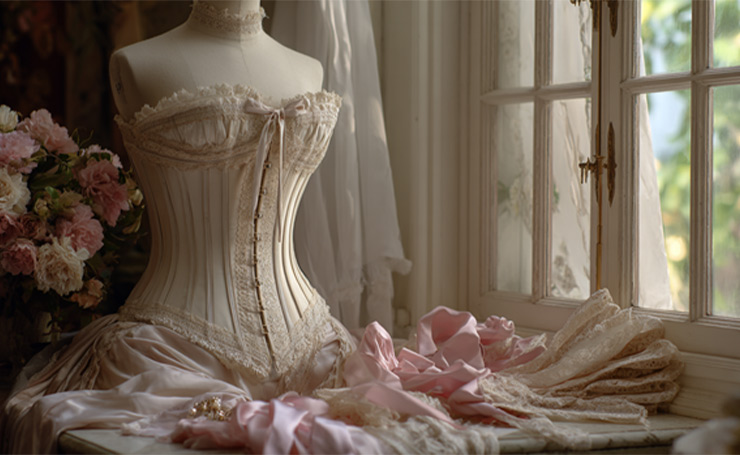
Other Gilded Age wardrobe details included high collars, puffed sleeves (also known as leg of mutton sleeves), long trails, and delicate embellishments. Day dresses used to have high necklines, while the evening gowns had a more bold décolletage.
The Glamor of Gilded Age Evening Wear
Evening attire during this era was the very picture of sophistication. Gilded Age ball gowns were designed for luxurious social events, such as opera nights, dinner parties, and grand balls. As these events were the pinnacle of society, the dresses of women used to match their splendor.
Typical evening attire used to be floor-length silk and lace gowns. They had low necklines, short sleeves, and an elegant train.

Dressmakers used historical dressmaking techniques, such as handmade boning and layered design, to make the dresses fit perfectly. The end result used to be a masterpiece that represented the opulent fashion of the Gilded Age in its true sense.
Men’s Attire in the Gilded Age
The men’s formal wear of the 19th century had a polished sophistication. They used to wear three-piece elegant suits, mostly in dark colors. The suit included stiff white shirts, high collars with cravats, bow ties or long ties, top hats, and tail coats.
Evening wear was mostly dark, like navy or black tailcoats with a white bow tie and gloves. Accessories like pocket watches, canes, and polished shoes were essential to complete the look.

Men also showed their identity through their fashion choices. They used clothes to project class, social status, and wealthy elite fashion history.
Gilded Age Jewelry and Accessories
Every Gilded Age outfit needed lavish accessories. The jewelry items of the era were masterpieces, created with diamonds, pearls, silver, and gold.
Women’s jewelry included tiaras, brooches, necklaces, and chokers. Some pieces were also custom-made to match their dresses. Moreover, gloves, jeweled combs, and handheld fans also added sophistication to the outfit.

For men, the accessories were cufflinks, tie pins, and pocket watches, which were also the subtle markers of class.
The accessories were not only decorative pieces. Even the smallest piece signified high society fashion of the Gilded Age.
The Legacy of the Era
We can find the influence of the Gilded Age in many modern fashion concepts.

Branding: This period marked the rise of branding. People started to associate class and good quality with particular names.
Consumer Culture: The rise of department stores like Macy’s and Marshall Field’s set the stage for today’s retail culture.
Democratic Fashion: While Gilded fashion was mostly associated with the elite class, ready-to-wear dresses made style accessible to the middle class as well.
Influence of the Gilded Age Today
The fascination with the Gilded Age fashion has never faded. Modern designers, filmmakers, and costume artists take historical costume inspiration from this era.
The structured silhouettes with ornate embellishments can be seen in many popular media, for example, “Downton Abbey” and “The Gilded Age.”

Moreover, we are seeing a rise in corsets that are combined with modern dress pieces. The fashion inspiration from that era reminds us that artistry and luxury never go out of style.
The Bottom Line
The Gilded Age is one of the most enchanting eras in the history of fashion. Every detail of the outfit and every piece of accessory was the symbol of elegance, class, and opulence.
Today, we see the influence of the Gilded Age fashion in media and entertainment. Moreover, many modern outfits also incorporate some clothing pieces from that time for a sophisticated look, showing that grace never goes out of style.
Ready to dive into the world of fashion? Explore the Trendy Fashion Guide for more detailed guides.
FAQs
What is meant by Gilded Age Fashion?
Gilded Age fashion spans from the late 19th century to the beginning of the 20th century. This era was marked by luxurious outfits and accessories for both men and women. The clothes and accessories were the symbols of wealth, education, and social status.
How does Gilded Fashion Inspire Modern Clothing Style?
Modern designers often draw inspiration from the Gilded Age fashion trends. Many contemporary styles, like corset-inspired tops, structured gowns, and lace embellishments, are nods to that era.
What Materials and Fabrics were popular in the Gilded Age?
The elite favored luxurious fabrics and materials like silk, brocade, velvet, and lace. These were usually imported from Europe and handcrafted into gowns or suits.